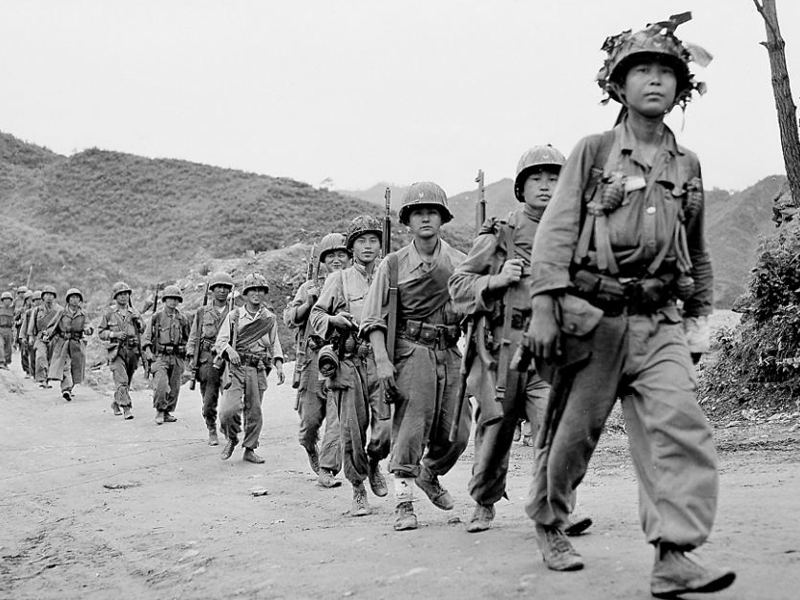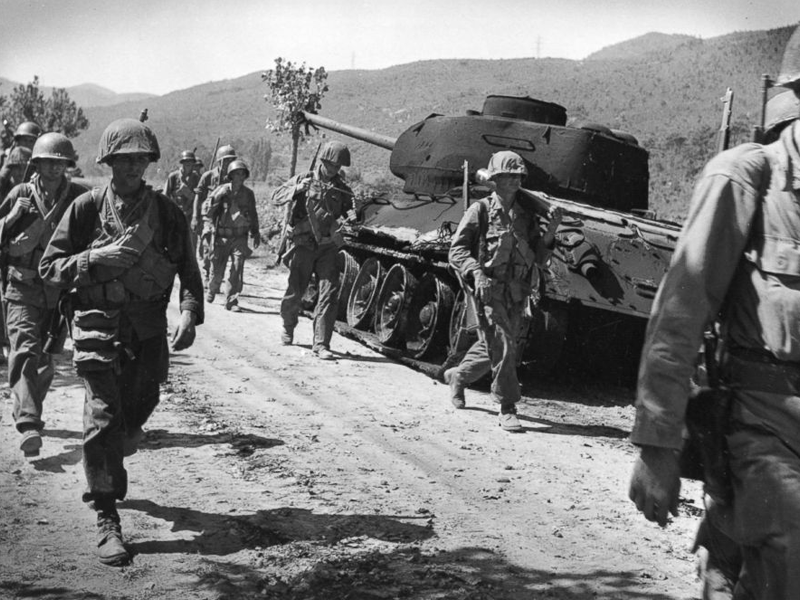
The Korean War left scars deeper than the battlefields. It shaped a generation that learned to survive through hunger, displacement, and the constant uncertainty of life. Between the ashes of war and the dawn of a new nation, countless children and families discovered what endurance truly meant. Their story is not about military victories or political divides—it’s about human survival, resilience, and the unshakable will to rebuild when everything seemed lost.
A Nation Caught Between Conflict and Change
When the Korean War erupted in 1950, Korea was already recovering from decades of Japanese occupation. The war didn’t just divide the peninsula—it tore through homes, families, and futures. Cities were flattened, food was scarce, and millions became refugees overnight. Children walked for miles alongside their parents, carrying blankets, pots, and memories of homes they would never see again.
For that generation, survival wasn’t a concept—it was a daily habit. Each morning meant finding food, warmth, and a safe place to rest. Each night meant enduring fear and the distant echo of artillery. Yet, amid the chaos, families clung to a shared belief: that someday, life would return to normal.
Lessons in Resourcefulness
Post-war Korea was defined by scarcity. For years after the fighting stopped, food shortages and economic collapse were common. Families learned to stretch a single bowl of rice into a meal for many, substituting barley, corn, or sweet potatoes when supplies ran out. Children gathered wood, traded scraps, and shared what little they had with neighbors.
Those who grew up in that environment developed an extraordinary sense of resourcefulness. They learned early that waste was a luxury no one could afford. Simple items like pencils, clothes, and shoes were mended, shared, and reused until they could no longer serve their purpose. That frugality and ingenuity became part of the cultural DNA of the generation that rebuilt Korea.
The Power of Education and Determination
In the years following the war, classrooms often had no heat, no desks, and barely any supplies. But children filled them anyway—hungry to learn, eager to change their destiny. Parents, many of whom were uneducated themselves, saw schooling as the only path to security and progress.
This relentless focus on education became a driving force behind Korea’s postwar transformation. The students who once studied under broken roofs went on to become teachers, engineers, and entrepreneurs. They carried the memory of hardship as motivation, turning survival into progress.
What emerged from the rubble was a collective mindset rooted in discipline, endurance, and the belief that knowledge could overcome even the deepest loss.
The Emotional Cost of Survival
While the physical wounds of war healed, emotional ones took longer to fade. Many survivors carried silent pain—the trauma of separation, the loss of loved ones, and the memory of hunger and fear. But they rarely spoke of it.
For this generation, expressing grief was secondary to rebuilding. Silence became strength. They poured their pain into work, family, and community, determined to ensure that their children would never face what they had endured. The resilience they developed was not the absence of pain, but the ability to live meaningfully despite it.
Rebuilding a Nation Through Unity and Sacrifice
After the armistice in 1953, Korea was one of the poorest countries in the world. Yet, in just a few decades, it rose to become one of the most dynamic economies. This transformation was powered by the very generation that had grown up between wars.
They understood sacrifice better than anyone. They worked long hours, took on multiple jobs, and invested everything in their children’s future. Communities helped one another, sharing resources and rebuilding schools, roads, and local markets. From this collective effort emerged the foundations of modern Korea—industry, education, and innovation built on perseverance rather than privilege.
Their success wasn’t just economic; it was moral and emotional. It proved that even in the aftermath of destruction, a nation could rebuild itself through unity and determination.
Enduring Values in a Modern World
Today, the children of that generation—now grandparents and elders—often reflect on the lessons they learned in those years of hardship. They talk about gratitude, patience, and the value of hard work. To them, comfort is not something to be taken for granted but something to be earned and appreciated.
Their resilience continues to shape Korean society today. It’s visible in the emphasis on education, the strength of family ties, and the collective pride in national progress. Even as technology and prosperity redefine modern life, the memory of struggle remains a quiet reminder of what built the nation’s strength.
The Universal Lesson of Survival
Though the Korean War was a specific historical event, the lessons it left behind are universal. In every part of the world, people who have faced war, displacement, or hardship carry similar traits—resilience, adaptability, and hope. They remind us that survival is not just about enduring, but about growing stronger through adversity.
Generations shaped by conflict often become the architects of peace. They understand the true cost of freedom and the value of compassion. Their lives teach us that progress doesn’t begin with wealth or stability—it begins with the courage to rebuild, one act of perseverance at a time.
Conclusion
Growing up between wars meant growing up in uncertainty, but it also meant learning the deepest truths about human endurance. The Korean generation that lived through those years didn’t just survive—they redefined survival itself. Through hardship, they built resilience; through scarcity, they learned gratitude; and through loss, they found purpose.
Their story is a reminder that every generation inherits both the struggles and the strengths of the ones before it. And sometimes, the hardest beginnings produce the most extraordinary legacies.