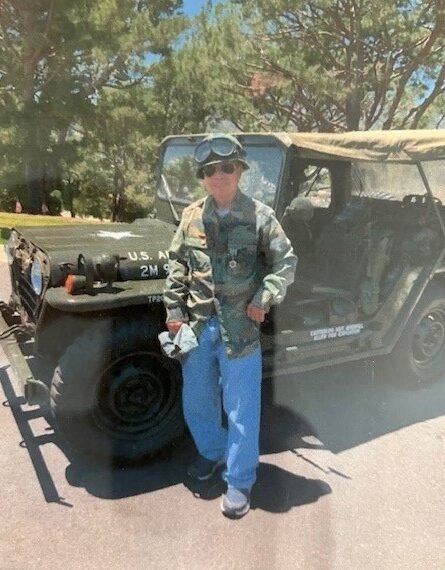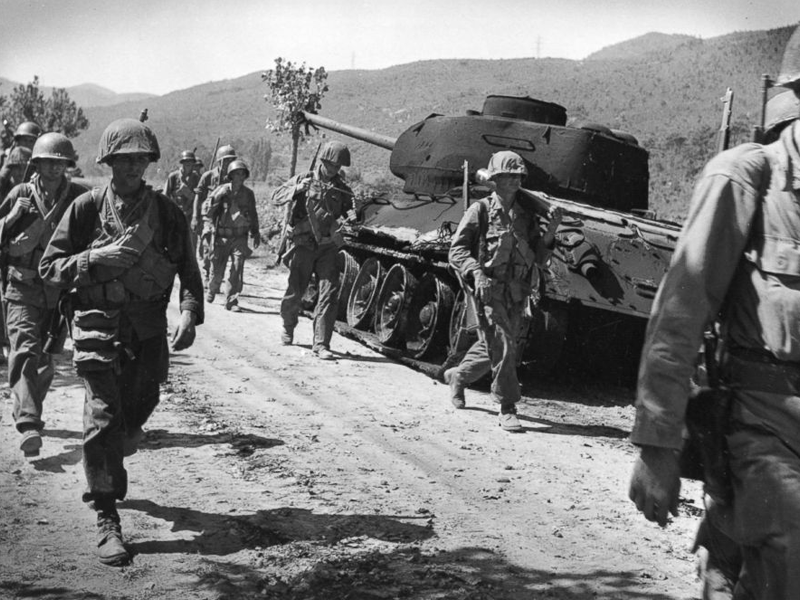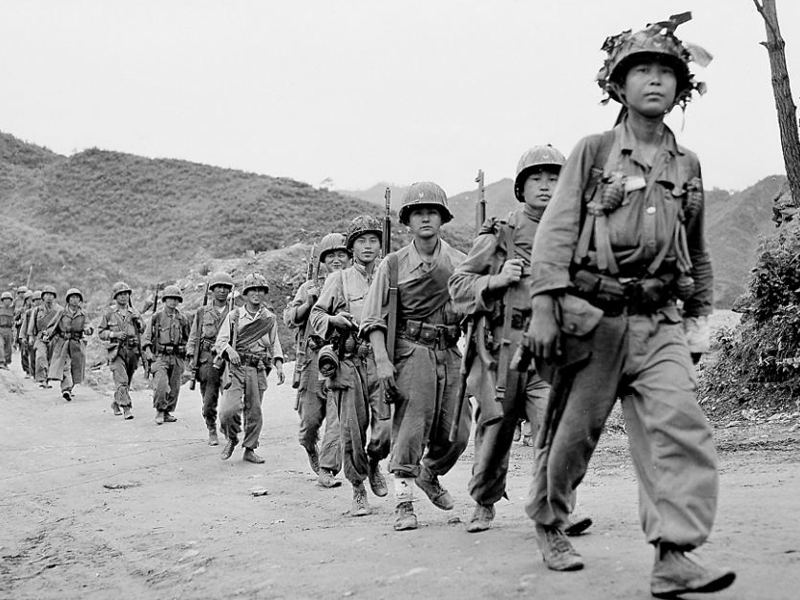
This article draws on episodes from the memoir Incheon to Vietnam, the true account of Chris D. Lee, a Republic of Korea (ROK) Army interpreter assigned to a logistics headquarters during the Vietnam War. You don’t need to know him or the book to follow the argument. The point is larger: wars are decided not only by soldiers at the front but by those who move food, fuel, medicine, orders, and meaning. Logistics and interpreters make that movement possible. Their work rarely makes headlines, but it often decides outcomes.
What Counts As The “Invisible Front”
Picture a war’s nervous system: depots, manifests, radio nets, motor pools, ration cards, hospital requests, convoy schedules, and the translations that keep coalition partners aligned. None of this looks dramatic. All of it is essential. A single digit mistranscribed on a form can delay an air evacuation; a misunderstood verb on a radio can send a truck the wrong way. The “invisible front” is the web of small decisions that, repeated thousands of times, become the difference between a unit that functions and a unit that falters.
A Case Study: An Interpreter At A Logistics HQ
Lee’s war began in July 1967 with rope ladders over the side of a troopship off Qui Nhon and a surf landing near Nha Trang. The beach looked empty—palm trees, long light—yet his welcome was immediate: students and officials, handshakes, a reminder that wars happen among civilians. Hours later, he reported to the 100th Logistics Command’s G-1/Adjutant General office, four desks away from senior command.
From there, the invisible front came into focus. Personnel rosters determined who could be sent where; convoy manifests determined who ate, who got bandages, and which trucks had priority fuel. Requests to and from the U.S. depot at Cam Ranh Bay needed to be translated precisely—quantities, calibers, shelf lives, and delivery windows. He wasn’t “just doing paperwork.” He was converting urgency into action across languages and chains of command.
Accuracy As Mercy
Interpreting in war is part language, part ethics. Lee learned quickly that the merciful choice was the precise choice. A careful translation of a hospital resupply could mean antibiotics, where guesswork might deliver the wrong vials. A measured radio call could keep an angry misunderstanding from spiraling. The job asked him to be exact when tired, calm when hurried, and humble when praised. Mercy, in this setting, looked like getting the details right for people he might never meet.
Communication That Prevents Catastrophe
One night on perimeter watch, his squad spotted cigarette embers drifting through the trees and readied rifles. The situation felt like an ambush. A radio check—and the decision to pause—revealed the truth: friendly South Vietnamese patrolmen. It’s a single scene, but it carries a permanent lesson about the invisible front. Good communications, shared vocabulary, and disciplined restraint save lives as surely as firepower.
Tet: When Systems Get Stress-Tested
During the Tet Offensive of 1968, the command went to high alert. Sandbags rose; helmets stayed on; sequence firing orders rolled down the perimeter. The night was long, noisy, and uncertain. What kept the base viable wasn’t only courage; it was the system: who guarded when, which lines stayed open, how quickly requests were logged and routed, and whether the next convoy or airlift could be prepared despite the shock. War may be chaos, but well-run logistics and clear translation narrow the chaos enough for courage to matter.
The Quiet Power Of Documentation
Midway through his tour, Lee was tasked with compiling and translating a comprehensive report on civil-affairs work—mobile clinics, school repairs, orphanage support, road grading—across multiple provinces. It took months of collecting accounts, checking figures, and rendering Korean reports into clean, persuasive English. The document earned a presidential medal for his commanding general and brought Lee a promotion he hadn’t sought. The deeper takeaway: documentation can be an act of dignity. Writing down what was done for vulnerable people says those efforts count, even when they’re not dramatic.
Logistics Isn’t “Rear-Area”—It’s Decision-Making Under Pressure
Popular culture treats logistics as the quiet back office and interpreters as side characters. In coalition wars, they are central. Logistics decides which unit has momentum tomorrow. Interpreters decide whether partners remain partners under stress. Both roles demand a strange blend of traits: technical precision, cultural fluency, stamina, skepticism, and kindness. The work seldom offers a “hero shot,” but it builds the conditions in which heroes can act—and come home.
After The Uniform: The Same Muscles In Civilian Life
When Lee returned to a poor, rebuilding Korea, the habits of the invisible front followed him. He kept knocking on doors with age limits and closed signs. He studied at night, worked by day, and discovered that civilian logistics—contracts, packaging, port timetables—runs on the same muscles: clarity, accountability, and timing. Later, in Honolulu and across new industries, he kept doing versions of the same job: connecting people, moving resources, keeping promises. Veterans often find meaning in that continuity. The world needs fewer slogans and more people who can get the shipment right.
What Readers Can Use—Whether Or Not They’ve Served
- Precision is care: In any field, accurate requests and clean handoffs are acts of respect.
- Translate the intent, not just the words: Cross-functional teams are coalitions; somebody must bridge jargon into shared meaning.
- Design for stress: A system that only works on calm days isn’t a system. Build checklists and redundancies that hold under pressure.
- Document the good: Impact reports, after-action notes, and thank-yous don’t slow you down; they strengthen trust.
- Practice calm pauses: The quick radio check that prevents a mistake is leadership, not hesitation.
Why This Matters Now
Modern crises—disasters, pandemics, refugee movements—aren’t solved by heroism alone. They are eased by the same invisible front: supply chains that respect reality, translators who carry meaning across gaps, and teams who treat precision as compassion. The best leaders understand this. They hire for it, budget for it, celebrate it, and model it.
If there’s a single image to keep, let it be this: a small desk in a hot Quonset hut where someone is aligning names, numbers, and needs so that food arrives, a clinic opens, or a convoy launches safely. No one will cheer that desk at a parade. But somewhere down the road, a soldier will eat, a patient will heal, and a village will sleep a little easier. That is the invisible front at work—quiet, exacting, and, in the end, decisive.